
Soft Tissue Therapy in Irvine CA
Soft tissue therapy is a hands-on approach used to address muscle tension, stiffness, restricted movement, and discomfort involving muscles and surrounding connective tissues. At The Alignment Studio in Irvine, soft tissue treatment is personalized around how your body moves, where you feel discomfort, and what may be contributing to the problem. It can be used independently or alongside 〔IL-1〕chiropractic care when appropriate.
Whether you spend long hours at a desk, train regularly, recover from physical strain, or simply feel certain areas of your body stay tight, the goal is to help you move more comfortably and function better.
What Is Soft Tissue Therapy?
- Soft tissue therapy refers to treatment techniques directed at the body’s muscles, fascia, and other connective tissues.
- These tissues support movement, stabilize joints, and respond to the physical demands the body faces every day.
- Muscles and fascia can become sensitive, tight, or restricted after repetitive activity, prolonged sitting, changes in movement, physical training, or injury.
- Soft tissue treatment identifies these areas and applies appropriate hands-on techniques based on your symptoms, movement, and treatment goals.
- Rather than treating every patient the same way, the treatment area, technique, and pressure can be adjusted to your individual needs.
What Are Soft Tissues?
Soft tissues are structures that surround, connect, support, and help move bones and joints.
They include:
- Muscles
- Fascia
- Tendons
- Ligaments
- Other connective tissues
When these structures move comfortably, everyday activities such as turning your neck, raising your arm, bending, walking, running, lifting, or exercising can feel natural.
When an area becomes irritated or restricted, you may notice stiffness, tenderness, reduced mobility, muscular tightness, or discomfort during movement.
Because several structures can contribute to similar symptoms, an assessment is important before deciding what should be treated.
What Can Soft Tissue Therapy Help With?
People seek soft tissue therapy for different reasons. Some have one specific area of discomfort, while others notice general muscle tightness or reduced mobility.
Muscle Tightness and Stiffness
- Muscles can feel tight after exercise, repetitive activity, prolonged positioning, or changes in normal movement.
- Soft tissue techniques may be used to address sensitive or restricted areas and improve comfort during movement.
Neck and Shoulder Tension
- Neck and shoulder tension is common among people who work at computers, drive frequently, exercise, or remain in one position for extended periods.
- Persistent neck symptoms may involve muscles, joints, posture, a previous injury, or several factors at once.
- Patients experiencing neck stiffness or restricted cervical movement can also learn more about our 〔IL-2〕cervical chiropractic treatment in Irvine.
Back and Hip Tightness
- The muscles surrounding the lower back, pelvis, and hips work together during sitting, walking, lifting, and exercise.
- If an area feels restricted or uncomfortable, soft tissue therapy may form part of a broader treatment plan focused on mobility and function.
Exercise and Sports-Related Muscle Tension
- Physical training repeatedly loads muscles and connective tissues.
- Athletes and active adults may seek soft tissue care when they experience muscular tightness, soreness, or movement restrictions related to training.
- Our clinic also works with active individuals through 〔IL-3〕athlete recovery and chiropractic care in Irvine.
Repetitive Work and Daily Activity
- You do not need to be an athlete to develop muscular tension.
- Computer work, commuting, repetitive lifting, prolonged standing, and other daily activities can influence how the body feels and moves.
- The key question is not simply where you feel discomfort, but which movements, positions, activities, and tissues may be involved.
How Does Soft Tissue Therapy Work?
Soft tissue therapy begins by identifying areas that are sensitive, tight, or moving differently than expected.
Your provider may consider your symptoms, movement, daily activities, exercise habits, previous injuries, and health history.
Hands-on treatment can then target the muscles and connective tissues most relevant to your complaint.
Depending on your individual needs, treatment may include manual soft tissue techniques, focused pressure, myofascial techniques, mobility work, or other appropriate methods.
The goal isn’t simply to apply as much pressure as possible.
More pressure does not automatically mean more effective treatment.
Soft tissue care should be targeted, appropriate for the tissue being treated, and adjusted according to your comfort and response.
What Happens During a Soft Tissue Therapy Appointment?
Your appointment begins with understanding what brought you in.
You may be asked:
Where do you feel discomfort? When did it begin? Which movements make it better or worse? Have you experienced a previous injury? What activities would you like to perform more comfortably?
We may also assess your movement to understand how your symptoms relate to the affected area.
Treatment is then directed toward the relevant soft tissues.
Some areas may require focused treatment, while others may respond better to lighter techniques or mobility-based care.
Your treatment can change as your symptoms and movement change.
For a broader explanation of examinations, treatment options, X-rays when appropriate, and follow-up care, visit our 〔IL-4〕chiropractic services page.
Should Soft Tissue Therapy Hurt?
- Soft tissue treatment can sometimes feel intense when an area is already sensitive or tight, but treatment should remain controlled and tolerable.
- Pain is not the goal.
- Your provider can adjust the pressure, technique, or treatment area based on your comfort.
- Communicate what you feel instead of assuming stronger pressure always produces a better result.
- Some people may experience temporary tenderness after hands-on treatment, particularly when an already sensitive area has been treated.
- Your provider can explain what to expect based on the treatment performed.
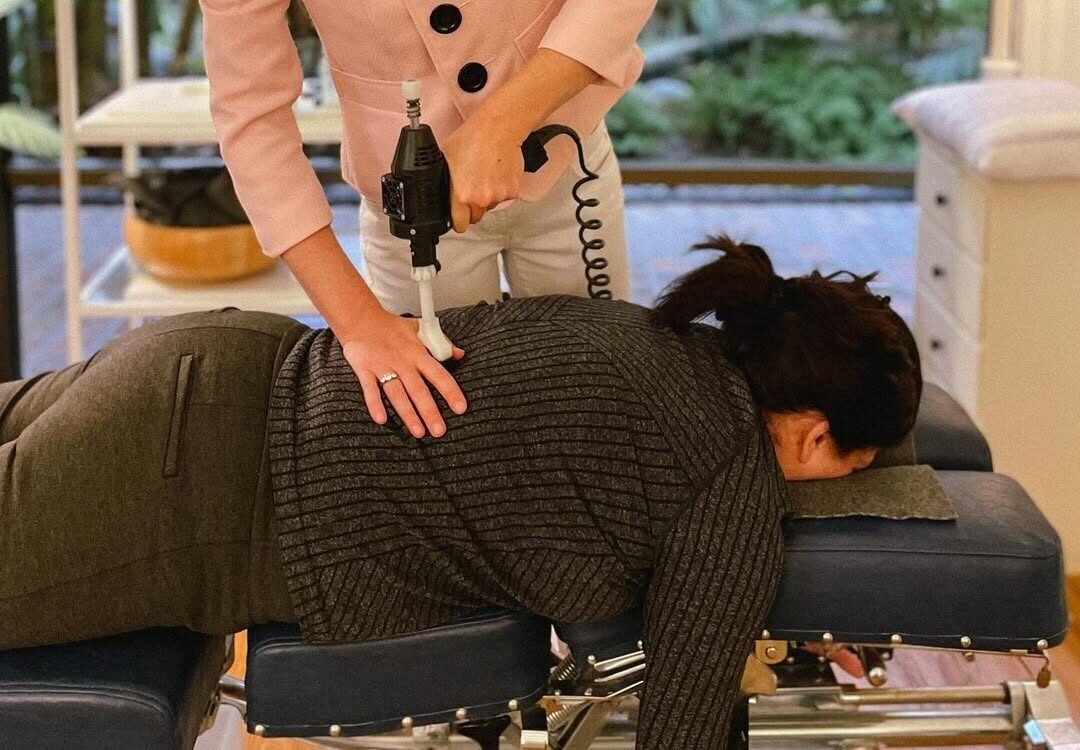
Soft Tissue Therapy and Chiropractic Care
Muscles, connective tissues, joints, and movement interact with one another.
For this reason, soft tissue therapy and chiropractic treatment may sometimes be incorporated into the same care plan.
Soft tissue work primarily addresses muscles and connective tissues, while chiropractic care may involve evaluating and treating joint movement and related musculoskeletal problems.
At The Alignment Studio, 〔IL-5〕Dr. Monica Scott evaluates each patient individually to determine which approach may be appropriate.
Combining services is not automatically necessary for every patient. Your treatment should depend on your examination, symptoms, goals, and response to care.
Soft Tissue Therapy vs. Massage: What Is the Difference?
- Soft tissue therapy and massage can overlap, but they aren’t always used for the same purpose.
- Massage may be used for relaxation, general muscular comfort, recovery, or therapeutic purposes.
- Soft tissue therapy is commonly directed toward a specific symptom, tissue, movement restriction, muscle group, or functional goal.
- A soft tissue session may therefore involve assessment before treatment and reassessment afterward.
- The important difference is not simply whether one treatment is “deeper.”
- What matters is the treatment purpose, the tissues involved, and how the treatment relates to the patient’s individual condition.
Soft Tissue Therapy for Athletes and Active Adults
- Running, strength training, cycling, martial arts, recreational sports, and other activities repeatedly load muscles and connective tissues.
- That loading is a normal part of training.
- However, active people may occasionally develop areas that feel unusually tight, sore, or restricted.
- Soft tissue therapy can fit into a broader recovery or mobility plan when soft tissue involvement seems relevant.
- Treatment should also consider your sport, training volume, previous injuries, mobility, and the movements that reproduce your symptoms.
- The Alignment Studio has experience working with active individuals, including grapplers. BJJ athletes can learn more about our approach to 〔IL-6〕chiropractic care for Jiu-Jitsu athletes in Irvine.
- The goal isn’t simply to make a muscle feel looser temporarily. It is to understand how the affected area relates to the activity you want to perform.
Soft Tissue Therapy for Desk Workers and Professionals
- Many Irvine professionals spend much of the day working at computers, attending meetings, driving, or staying in one position.
- Long periods in the same position may contribute to stiffness or muscular tension involving areas such as the:
- Neck, shoulders, upper back, lower back, and hips.
- Soft tissue treatment may help address muscular tension, but it’s only one part of the picture.
- Your work setup, movement habits, activity level, stress, and time spent in one position may also be relevant.
- When appropriate, movement or ergonomic changes can complement treatment.
How Many Soft Tissue Therapy Sessions Will I Need?
- There is no single number of sessions that is appropriate for everyone.
- A recent episode of muscular tightness may behave differently from a problem that has been present for months or repeatedly returns during the same activity.
- The frequency and number of visits can depend on:
- How long symptoms have been present, the tissues involved, activity level, previous injuries, treatment goals, and response to care.
- Progress should be reassessed instead of assuming every patient requires the same predetermined schedule.
Can Soft Tissue Therapy Improve Mobility?
- Muscles and connective tissue restrictions can sometimes affect how comfortably an area moves.
- When soft tissue restrictions contribute to a movement limitation, appropriate hands-on treatment may help improve movement comfort.
- However, mobility is influenced by more than muscles alone.
- Joint function, strength, previous injury, movement habits, pain sensitivity, and other factors can also contribute.
- This is why assessment and reassessment are more useful than treating every mobility restriction in exactly the same way.
Personalized Soft Tissue Care at The Alignment Studio
- No two people use their bodies in exactly the same way.
- One person may spend most of the day sitting at a computer.
- Another may train five times per week.
- Someone else may be returning to activity after an injury or dealing with discomfort that gradually developed over time.
- Treatment should reflect those differences.
- At 〔IL-7〕The Alignment Studio in Irvine, care is based on your symptoms, movement, health history, activities, and goals rather than giving every patient the same soft tissue routine.
Why Choose The Alignment Studio for Soft Tissue Therapy in Irvine?
The Alignment Studio provides chiropractic and soft tissue care for people seeking better movement, greater comfort, and an individualized approach to musculoskeletal care.
The clinic is located at:
2152 DuPont Dr., Suite 180
Irvine, CA 92612
- The office is conveniently located near the 405, MacArthur Boulevard, and John Wayne Airport.
- Treatment is individualized rather than based solely on where you feel pain.
- The goal is to understand the complaint, assess the relevant movement and tissues, and choose an appropriate treatment approach.
- You can learn more about 〔IL-5〕Dr. Monica Scott and her approach to chiropractic care before scheduling your visit.
What Your Session Will Feel Like
When you come in, we first understand what your body is going through. We check your movement, your pain areas, and your daily habits. Then we begin the hands-on therapy to release tension and improve function.
You may feel some pressure in tight areas, but it is controlled and focused on relief. After the session, many people feel immediate improvement. We also guide you with simple steps to help your recovery continue even after you leave.
Soft Tissue Therapy vs Massage
Many people think this is just like a massage, but it is very different. Massage is mainly for relaxation, while soft tissue therapy is focused on treatment and recovery.
We work deeper to fix the actual problem in your muscles and tissues. The goal is not just to help you relax for a day, but to help your body function better for the long term.
Start Feeling Better Today
If you are tired of living with pain, stiffness, or slow recovery, now is the time to take the next step. Your body has the ability to heal, it just needs the right care.
At The Alignment Studio in Irvine, we are here to help you move better, feel stronger, and live without constant discomfort. Book your soft tissue therapy session today and give your body the attention it deserves.
Frequently Asked Questions About Soft Tissue Therapy In Irvine, CA
Is soft tissue therapy painful in Irvine?
Soft tissue therapy in Irvine may feel slightly intense in tight areas, but it is always controlled and focused on relief. Most people feel relaxed and better after their session at our Irvine clinic.
How many soft tissue therapy sessions do I need in Irvine?
The number of sessions depends on your condition and how long the issue has been there. Many patients in Irvine start feeling improvement within the first few visits.
Can soft tissue therapy in Irvine help with chronic pain?
Yes, soft tissue therapy in Irvine is very effective for long term pain caused by muscle tightness, stress, and poor movement patterns.
Is soft tissue therapy safe for athletes in Irvine?
Yes, athletes in Irvine benefit a lot from this therapy. It helps with faster recovery, injury prevention, and better performance.
What is the difference between soft tissue therapy and massage in Irvine?
In Irvine, massage is mainly used for relaxation, while soft tissue therapy focuses on treating the root cause of pain and improving how your body functions.
Can I combine soft tissue therapy with chiropractic care in Irvine?
Yes, combining soft tissue therapy with chiropractic care in Irvine gives better and longer lasting results because it improves both alignment and muscle function.